
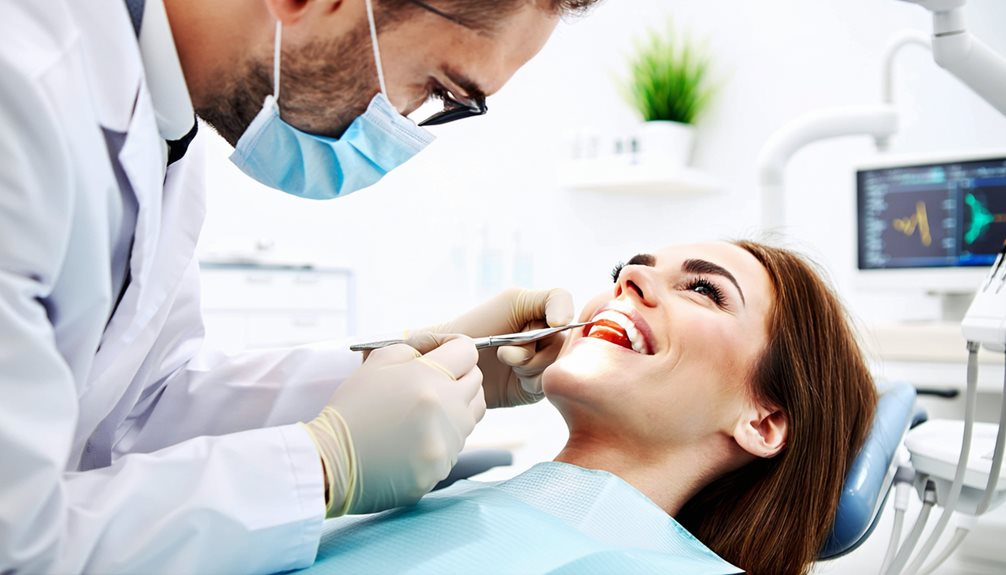
Selecting the top dentists for crown treatments involves evaluating key factors such as advanced technology use, dentist qualifications, and patient satisfaction. Experts in prosthodontics equipped with CAD/CAM and digital impression tools are leading in precision and efficiency. Patient reviews and before-and-after case studies can provide insight into the dentist’s expertise and treatment results. Confirm the dentist aligns with your dental insurance to manage costs effectively. Top-rated practices often offer a personalized approach, utilizing the latest dental innovations such as laser dentistry and 3D printing for superior fit and aesthetics. Discover further details to confirm the best dental care experience.
Understanding Crown Treatments
Crown treatments are a fundamental aspect of restorative dentistry, serving as an essential intervention for preserving tooth integrity and function. These procedures are meticulously designed to enhance crown longevity, guaranteeing that the restored tooth can withstand daily functional demands while maintaining its aesthetic appeal.
Technological advancements have considerably expanded the treatment options available, enabling practitioners to tailor solutions to individual patient needs with unparalleled precision.
In the domain of crown treatments, material selection plays a pivotal role in determining the durability and success of the restoration. Options such as porcelain, zirconia, and metal alloys are evaluated based on their strength, biocompatibility, and visual attributes.
Porcelain-fused-to-metal crowns offer a balance of strength and aesthetics, while all-ceramic crowns are favored for their superior esthetic qualities. Innovations in digital dentistry, including CAD/CAM technology, have revolutionized the fabrication process, allowing for custom-fit restorations that enhance crown longevity and patient satisfaction.
Moreover, the integration of evidence-based practices guarantees that treatment options are not only innovative but also grounded in scientific research, providing patients with reliable and long-lasting solutions.
As dental technology continues to evolve, crown treatments promise even greater advancements in restorative success.
Criteria for Selecting Dentists
Selecting the right dentist for crown treatments is a decision that greatly impacts the quality and success of the restoration. One must consider several criteria to guarantee ideal treatment outcomes.
To begin with, patient qualifications should be assessed meticulously. A dentist’s ability to tailor crown treatments to accommodate individual patient needs, such as underlying health conditions or specific dental anatomy, is essential. This personalized approach often correlates with improved durability and aesthetics of the crowns.
Secondly, the dentist’s expertise in using advanced technologies and materials is significant. Innovative techniques, such as digital impressions and CAD/CAM systems, can enhance precision and comfort, leading to superior treatment outcomes. A dentist proficient in these technologies is more likely to deliver crowns that fit accurately and function effectively.
Additionally, evaluating the dentist’s track record through patient testimonials and before-and-after case studies provides insight into their capability to achieve consistent results.
Finally, the dentist’s commitment to continuing education is a marker of their dedication to staying at the forefront of dental innovations. Continuous professional development guarantees that a dentist can offer the latest treatment methodologies, thereby maximizing patient satisfaction and long-term crown performance.
Top-Rated Dental Clinics
When evaluating top-rated dental clinics for crown treatments, the presence of advanced dental equipment is essential for ensuring precise and efficient procedures.
Equally important is the expertise of experienced dental professionals who can provide high-quality care and tailored treatment plans.
Together, these factors contribute greatly to the overall success and patient satisfaction in dental restorative services.
Advanced Dental Equipment
In today’s rapidly advancing dental field, the integration of state-of-the-art equipment in top-rated dental clinics is revolutionizing the way crown treatments are performed.
Dental innovations and cutting-edge technology are setting new standards for precision, efficiency, and patient comfort.
Here are four key technological advancements transforming crown treatments:
-
Digital Impressions: Traditional methods of taking dental impressions can be cumbersome and uncomfortable. Digital impression systems use intraoral scanners to capture highly accurate 3D images of the patient’s dentition, eliminating the need for messy impression materials and streamlining the treatment process.
-
CAD/CAM Technology: Computer-Aided Design and Computer-Aided Manufacturing (CAD/CAM) systems allow for the precise design and fabrication of dental crowns. This technology guarantees that crowns fit perfectly, reducing chair time and enhancing overall patient satisfaction.
-
3D Printing: The advent of 3D printing in dentistry has enabled the production of custom dental crowns with greater speed and accuracy. This innovation facilitates rapid prototyping and customization, assuring a tailored fit for each patient.
-
Laser Dentistry: Laser technology provides a minimally invasive option for shaping gum tissue and preparing teeth for crown placement. This technique reduces bleeding, discomfort, and healing time, enhancing the overall patient experience.
These advancements reflect the commitment of top dental clinics to harness modern technology for superior crown treatments.
Experienced Dental Professionals
While cutting-edge technology considerably enhances dental procedures, the expertise of experienced dental professionals remains integral to the success of crown treatments. The profound understanding of dental anatomy and materials possessed by these professionals guarantees precise diagnosis and tailored patient care.
In top-rated dental clinics, dental expertise is complemented by a commitment to continuous education, allowing practitioners to stay abreast of the latest advancements in restorative dentistry.
The proficiency of seasoned dentists in crown treatments is evidenced by their ability to blend aesthetic and functional requirements seamlessly. Their dexterity not only in shaping the crown but also in selecting appropriate materials, such as ceramic or zirconia, plays a crucial role in achieving ideal outcomes.
Furthermore, experienced professionals excel in patient care by providing thorough consultation, which includes discussing expectations and post-treatment maintenance.
In a landscape where technology and innovation drive dental care, the irreplaceable human element provided by skilled professionals remains essential. Their capacity to adapt to individual patient needs while incorporating innovative techniques underscores the importance of experience in achieving enduring success in crown treatments.
Consequently, choosing a dental clinic staffed with adept professionals guarantees a harmonious balance between technological advancements and personalized care, ultimately enhancing patient satisfaction and treatment longevity.
Expert Recommendations
Dental crowns, a crucial component in restorative dentistry, require careful consideration and expert guidance to guarantee ideal outcomes. Selecting the right dentist involves an understanding of several essential factors, securing crown longevity and cost-effectiveness, while maneuvering through dental insurance complexities. The following recommendations can guide you in choosing the best provider for crown treatments:
-
Professional Qualifications: Verify the dentist’s credentials and specialization in prosthodontics or restorative dentistry. This ensures expertise in handling complex crown cases, contributing to the longevity of the crowns.
-
Technological Adoption: Choose dentists who utilize advanced technologies such as digital impressions and CAD/CAM systems. These innovations not only enhance precision but also accelerate treatment processes, aligning with the desires of patients seeking modern solutions.
-
Insurance Network: Confirm if the dentist is within your dental insurance network. This can notably reduce out-of-pocket costs, ensuring that high-quality care is accessible and financially feasible.
-
Evidence-Based Practice: Opt for professionals who emphasize evidence-based treatments. This includes using materials and techniques that are scientifically proven to prolong crown life and improve overall oral health outcomes.
Patient Testimonials
Patient testimonials provide valuable insights into the effectiveness and quality of crown treatments, highlighting positive patient experiences and exceptional care stories.
These firsthand accounts serve as a demonstration to trustworthy dental practices, offering potential patients reassurance and confidence in their choice of dental care providers.
Positive Patient Experiences
When considering dental crown treatments, patient testimonials provide invaluable insights into the quality of care and outcomes experienced by individuals. Positive patient experiences are a reflection of the efficacy and innovation within the field of dentistry. These experiences highlight the importance of patient satisfaction and comfort levels, which are essential determinants of successful dental interventions.
-
Patient Satisfaction: Testimonials frequently emphasize high levels of satisfaction, showcasing how dentists prioritize patient needs and tailor treatments to meet individual requirements. This focus guarantees that dental procedures not only meet clinical standards but also enhance the overall patient experience.
-
Comfort Levels: The integration of advanced technologies and techniques has markedly improved comfort levels during crown procedures. Patients often report minimal discomfort, underscoring the commitment of top dentists to incorporate state-of-the-art practices that reduce anxiety and enhance patient well-being.
-
Aesthetic Outcomes: Patients frequently express delight with the aesthetic results of their crowns. This highlights the dentist’s skill in achieving natural-looking restorations that complement the patient’s existing dentition.
-
Longevity and Functionality**: Testimonials often mention the durability and functionality of dental crowns. This reflects the dentist’s ability to deliver long-lasting solutions that maintain oral health and functionality, thereby guaranteeing patient confidence** in their dental care.
Exceptional Care Stories
Exceptional care stories from patients provide critical evidence of the high-quality dental practice surrounding crown treatments. These narratives offer invaluable insights into patient success and the thorough care journeys facilitated by leading dental professionals. By examining these stories, we can identify innovative practices that greatly enhance patient outcomes.
Consider the case of a patient who, after years of discomfort and dissatisfaction with previous treatments, found renewed confidence through the expertise of a highly skilled dentist. This patient’s journey involved a detailed assessment, cutting-edge imaging technology, and a personalized treatment plan that incorporated the latest advancements in dental materials and techniques. The result was not only a successful crown placement but a complete transformation in the patient’s oral health and self-esteem.
Another story highlights a patient who required complex multi-crown restorations. Through collaborative efforts between dental specialists and the utilization of digital design technology, the patient experienced a seamless and efficient treatment process, minimizing chair time and maximizing comfort.
The success of these care journeys underscores the importance of adopting innovative approaches in dentistry, ensuring that each patient receives tailored and effective solutions for their crown treatment needs. Such testimonials are proof of the expertise and dedication of top-tier dental professionals.
Trustworthy Dental Practices
Trust is a cornerstone of successful dental practices, particularly in the domain of crown treatments where precision and patient comfort are paramount.
In an era driven by digital innovation and advanced dental technologies, maintaining patient trust through dental ethics is essential. Patient testimonials provide valuable insights into how dental practices uphold these principles.
Here are key elements that contribute to trustworthy dental practices:
-
Transparent Communication: Patients appreciate when dentists clearly explain the crown treatment process, potential risks, and expected outcomes. This transparency fosters a sense of trust and confidence in the practice.
-
Technological Proficiency: Practices that leverage cutting-edge technology, such as digital imaging and CAD/CAM systems, demonstrate a commitment to precision and innovation, enhancing patient trust in the efficacy of their treatments.
-
Ethical Standards: Adhering to high ethical standards and prioritizing patient well-being over financial gain reinforces trust. Patients value practices that recommend treatments based on necessity rather than profit.
-
Consistent Outcomes: Positive patient testimonials often highlight consistent and successful outcomes of crown treatments.
Reliable results build a reputation of trustworthiness, encouraging new patients to choose the practice confidently.
Advanced Dental Technology
Revolutionizing the field of dentistry, advanced dental technology has greatly enhanced the process and outcomes of crown treatments. Among the most notable innovations are 3D printing and digital impressions, which have transformed traditional methodologies, offering precision and efficiency that were previously unattainable.
Digital impressions utilize cutting-edge intraoral scanning devices to capture highly accurate, three-dimensional images of the patient’s oral cavity. This eliminates the need for conventional molding materials, reducing discomfort and increasing accuracy.
Once digital impressions are obtained, they can be seamlessly integrated with 3D printing technology to fabricate dental crowns with unprecedented precision. 3D printing allows for the creation of crowns that perfectly match the patient’s dental anatomy, ensuring a superior fit and ideal functionality. This technology not only enhances the quality of the dental restorations but also greatly reduces the time required for crown fabrication, allowing for quicker delivery and improved patient satisfaction.
Moreover, the integration of these technologies into dental practices indicates a shift towards more sustainable and cost-effective solutions. By minimizing waste and enhancing material utilization, 3D printing and digital impressions represent a forward-thinking approach to dental care, setting a new standard for excellence in crown treatments.
Affordable Crown Solutions
In the domain of dental restorations, offering cost-effective options for crown treatments is essential to meet diverse patient needs.
Evidence suggests that budget-friendly alternatives, such as resin-based crowns and computer-aided design/computer-aided manufacturing (CAD/CAM) fabricated crowns, can provide satisfactory outcomes without compromising quality.
Cost-Effective Dental Options
When considering dental restorations, particularly crowns, patients often seek cost-effective solutions that do not compromise on quality or durability. Achieving affordability in dental treatments involves exploring various options that balance price with innovation and performance. Key factors include insurance coverage and the choice of materials and techniques employed by dental practitioners.
-
Insurance Coverage: Leveraging dental insurance can greatly reduce the out-of-pocket costs associated with crowns. Patients should review their policies to understand the extent of coverage available for restorative treatments.
-
Material Selection: Opting for materials like porcelain-fused-to-metal (PFM) or resin can offer a cost-effective alternative to all-ceramic options while maintaining functionality and aesthetics. These materials have demonstrated reliability and are often more affordable.
-
In-Office Technology: Dentists utilizing advanced technologies such as CAD/CAM systems can fabricate crowns in a single visit, reducing labor costs and improving efficiency. This approach not only saves time but can also reduce overall treatment expenses.
-
Preventive Measures: Emphasizing preventive dental care can help in minimizing the need for extensive restorative work. Regular check-ups and cleanings can identify issues early, potentially avoiding more costly procedures.
Budget-Friendly Crown Alternatives
Exploring affordable crown solutions requires a focus on both innovative techniques and alternative materials that maintain quality without exceeding budgetary constraints.
One promising approach includes the utilization of resin-based materials that offer a cost-effective yet durable option for patients. Resin crowns can serve as a viable interim solution, allowing patients to receive necessary dental care while considering longer-term investments. The use of CAD/CAM technology in fabricating these crowns enhances precision and reduces labor costs, further contributing to affordability.
Additionally, temporary crown solutions play a critical role in providing patients with immediate relief and functional restoration without considerable financial commitment. These solutions can be particularly advantageous for individuals exploring dental financing options, allowing them to manage expenses more effectively over time.
Incorporating dental financing options into treatment plans can greatly broaden access to crown procedures. Flexible payment plans and low-interest financing can alleviate the financial burden for patients, making advanced dental care achievable.
As dental technology continues to advance, the integration of innovative materials and financing strategies will be pivotal in delivering cost-effective crown treatments without compromising on quality or patient satisfaction. Such advancements affirm the commitment to accessibility and excellence in dental care.
Specialist Dentist Profiles
Amidst the myriad of dental care options, understanding the profiles of specialist dentists who perform crown treatments is vital for patients seeking ideal outcomes. Selecting a dentist involves evaluating their qualifications and ability to communicate effectively with patients.
The following elements are significant in evaluating specialist dentist profiles for crown treatments:
-
Dentist Qualifications: An accredited dental degree with additional certifications in restorative dentistry or prosthodontics underscores a dentist’s proficiency in crown treatments. Continuous education and attendance at workshops highlight commitment to staying abreast of technological advancements.
-
Patient Communication: Effective patient-dentist communication fosters a relationship built on trust and understanding. Dentists who excel in this area guarantee that patients are well-informed about treatment options, possible outcomes, and post-procedure care, thereby enhancing patient satisfaction and compliance.
-
Technological Proficiency: The integration of digital imaging and CAD/CAM technology in practice showcases a dentist’s dedication to precision and efficiency. This technological adeptness results in crowns that are not only aesthetically pleasing but also functionally optimal.
-
Reputation and Reviews: A dentist’s reputation, bolstered by positive patient testimonials and peer endorsements, is indicative of their skill and reliability. Online reviews and professional accolades can provide insight into their practice standards and patient care quality.
These factors collectively guide patients in choosing the right specialist for crown treatments.
Convenient Locations
Having explored the profiles of specialist dentists, another important aspect in selecting the right practitioner for crown treatments is the convenience of their location. As dental crowns often necessitate multiple visits, choosing a provider with local dental options can greatly enhance the patient experience. Proximity to home or workplace reduces travel time and stress, ensuring that follow-up care and adjustments are easily manageable.
In the context of modern dentistry, the accessibility of clinics plays a pivotal role. Easily accessible clinics not only provide convenience but also indicate a forward-thinking practice that prioritizes patient-centric care. Such establishments are often equipped with state-of-the-art technology and innovative treatment methodologies, aligning with the expectations of a tech-savvy clientele.
The strategic placement of these clinics in urban centers or close to major transport links further underscores a commitment to accessibility and convenience.
Furthermore, the integration of digital platforms in these clinics allows potential patients to explore and evaluate their options seamlessly. Virtual consultations and digital appointment scheduling are just some of the innovative solutions that complement physical proximity, ensuring that patients can make informed decisions with minimal hassle.
As a result, selecting a conveniently located dental clinic can profoundly impact the overall treatment journey.
Booking Your Appointment
Scheduling your dental appointment efficiently is essential to guarantee a streamlined treatment process for crown procedures. With advancements in digital technology, booking your appointment has become more accessible and efficient than ever before.
Here are several innovative strategies to enhance your appointment scheduling experience:
-
Online Scheduling: Utilize dentist websites or mobile applications offering online scheduling. This feature allows patients to book, modify, or cancel appointments at their convenience without the need for direct communication with the dental office.
-
Appointment Reminders: Opt for services that provide appointment reminders via text or email. These reminders help reduce missed appointments, ensuring that your treatment timeline remains on track and minimizing disruptions in dental care.
-
Automated Systems: Seek dental practices implementing automated scheduling systems. Such systems offer real-time availability, enabling you to select the most convenient appointment slots and reducing the chances of double bookings or errors.
-
Integrated Patient Portals: Engage with practices offering integrated patient portals. These platforms provide a thorough view of your treatment history, upcoming appointments, and necessary pre-appointment preparations, facilitating a seamless experience from scheduling to treatment completion.
Frequently Asked Questions
How Long Does a Dental Crown Procedure Take?
The crown procedure duration typically spans two appointments. Initially, the crown fitting process involves tooth preparation and impressions, lasting about 60-90 minutes. The second appointment, for crown placement, usually requires 30-60 minutes, ensuring ideal restoration.
Can Dental Crowns Be Replaced if Damaged?
Dental crowns can be replaced if damaged, with crown replacement options depending on the damage’s extent. Crown damage causes include wear, trauma, or decay. Innovative materials and techniques enhance durability and aesthetics in modern crown replacements.
Are There Dietary Restrictions After Getting a Dental Crown?
Following dental crown placement, adherence to dietary guidelines is essential. Food recommendations include avoiding sticky or hard foods to prevent damage. Opt for softer foods initially, gradually reintroducing a varied diet while prioritizing crown integrity and oral health.
What Is the Average Lifespan of a Dental Crown?
The average lifespan of a dental crown varies based on crown materials and crown types, ranging from 5 to 15 years. Innovations in ceramic and zirconia crowns offer enhanced durability and longevity, subject to proper oral hygiene and maintenance.
Do Dental Crowns Require Special Maintenance or Care?
Dental crowns necessitate specific care practices to guarantee longevity. Essential crown hygiene tips include regular flossing and brushing. Maintenance guidelines suggest avoiding hard foods and scheduling bi-annual dental check-ups to detect potential issues promptly and enhance durability.
Conclusion
The evaluation of dental practitioners for crown treatments necessitates an extensive understanding of procedural intricacies and selection criteria. An examination of top-rated clinics, amplified by expert recommendations and patient testimonials, underscores the importance of quality care. Cost-effective solutions and specialist profiles offer valuable insights into service offerings. Strategic clinic locations and streamlined appointment processes further enhance accessibility. By integrating these elements, individuals can make informed choices regarding dental crown procedures, ensuring ideal outcomes and patient satisfaction within the healthcare continuum.

