
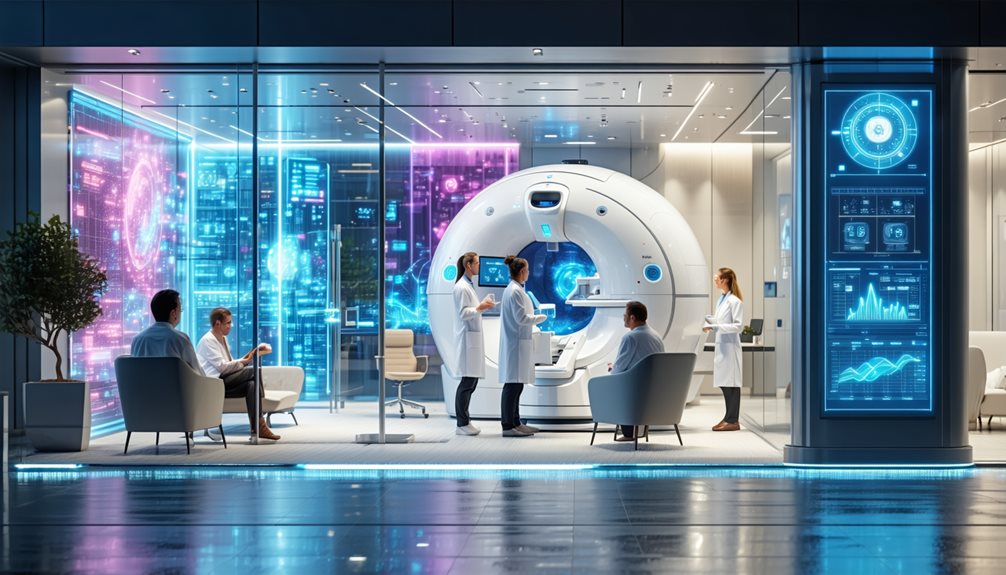
Selecting top restorative technology clinics requires a methodical approach. Analyze the clinic’s integration of advanced technologies, such as 3D printing and AI diagnostics, which highlight commitment to cutting-edge care. Verify dentist credentials, including specialized certifications and ongoing education, to guarantee proficiency in innovative treatments. Scrutinize the diversity of treatment options, emphasizing personalized care plans and holistic approaches. Review patient feedback for insights into service quality and technological reliability. Assess cost structures, including insurance partnerships and flexible financing, to assure affordability. Finally, consider the clinic’s location and accessibility, which affect convenience and overall patient experience. Explore further for a deeper understanding.
Assess Technological Advancements
Evaluating technological advancements is vital when selecting the right restorative technology clinic, as it directly impacts the quality and effectiveness of treatments offered. The integration of emerging technologies into clinical practice indicates a commitment to innovation and excellence.
Clinics that embrace digital innovations such as 3D printing, CAD/CAM systems, and intraoral scanners are positioned at the forefront of modern dentistry. These technologies not only enhance precision and customization but also streamline processes, reducing treatment time and improving patient outcomes.
Strategically analyzing a clinic’s technological portfolio is essential. It requires an understanding of how these innovations are implemented to optimize patient care. For instance, advanced imaging technologies allow for a more thorough assessment of dental structures, facilitating accurate diagnosis and treatment planning.
Additionally, the adoption of digital workflow systems can greatly enhance communication between practitioners and laboratories, ensuring seamless integration of restorative procedures.
In an industry driven by rapid technological change, staying abreast of the latest developments is imperative. Clinics that invest in continuous training and upgrading of their technological infrastructure demonstrate a proactive approach to meeting the evolving needs of patients.
Evaluate Dentist Credentials
While technological advancements establish the framework for modern restorative care, the expertise and qualifications of the practitioners utilizing these tools are equally important. Evaluating dentist credentials is a critical step in selecting a top restorative technology clinic.
Dentist qualifications encompass both academic achievements and practical proficiencies. Prospective patients should investigate whether the dentist has graduated from an accredited dental school and holds valid licensure in their practicing region. Further, board certification in specialized areas of restorative dentistry can signify a deeper level of expertise.
Professional experience plays a pivotal role in the successful application of restorative technologies. A dentist with extensive clinical experience is likely to possess a nuanced understanding of how to leverage cutting-edge tools effectively.
It is strategic to examine the dentist’s track record with innovative procedures and their involvement in ongoing education. Participation in professional organizations, workshops, and conferences can also indicate a commitment to staying abreast of the latest advancements.
Ultimately, a thorough evaluation of dentist qualifications and professional experience guarantees that patients receive care from practitioners who are not only knowledgeable but also adept at executing restorative techniques with precision and care, maximizing the benefits of modern technology.
Investigate Treatment Options
When selecting a restorative technology clinic, it is critical to assess the range of therapies available, ensuring that they encompass both traditional and cutting-edge treatment methods.
Evaluating the clinic’s commitment to innovative approaches, such as digital imaging and biocompatible materials, can offer insights into their adaptability and forward-thinking capabilities.
Furthermore, personalized care plans should be a priority, reflecting the clinic’s ability to tailor treatments to individual patient needs, thereby optimizing outcomes and enhancing patient satisfaction.
Range of Therapies
How can one effectively navigate the myriad of treatment options available in restorative technology clinics? The answer lies in understanding the spectrum of therapeutic techniques and treatment diversity inherent to each facility. A strategic analysis of available therapies can illuminate a clinic’s capacity to address diverse patient needs.
Clinics that offer a wide array of therapeutic interventions, such as regenerative medicine, neurorehabilitation, and advanced prosthetics, signal a commitment to thorough patient care. This diversity is not merely an indicator of a clinic’s technical prowess but also reflects its adaptability to emerging medical paradigms.
Clinics with a robust range of therapies are often at the forefront of integrating cutting-edge technology into patient management. For instance, the inclusion of bioengineering solutions and digital health platforms can enhance treatment efficacy.
Industry knowledge suggests that facilities equipped with multi-disciplinary teams are better positioned to implement innovative treatments. Evaluating a clinic’s portfolio of therapies involves analyzing their alignment with current scientific research and clinical outcomes.
As a result, selecting a clinic with a diverse therapeutic offering guarantees access to personalized care pathways, paving the way for improved patient outcomes and fostering an environment conducive to medical innovation.
Innovative Treatment Methods
Innovative treatment methods in restorative technology clinics are revolutionizing patient care by integrating the latest advancements in medical science and technology. These clinics leverage cutting edge innovations to provide patients with access to therapies that are not only effective but also minimally invasive.
One of the hallmarks of such treatment methods is the utilization of advanced techniques like regenerative medicine, which harnesses the body’s natural healing processes through stem cell therapy and platelet-rich plasma (PRP) injections. These methods aim to repair damaged tissues and accelerate recovery, offering a promising alternative to traditional surgical interventions.
Another significant development in this domain is the application of robotic-assisted rehabilitation, where precision and consistency are paramount. These robotic systems are designed to enhance patient outcomes through repetitive, controlled movements that facilitate neuromuscular re-education and muscle strengthening.
Additionally, virtual reality (VR) and augmented reality (AR) technologies are emerging as transformative tools in rehabilitation settings, providing immersive environments that improve patient engagement and compliance.
Clinics that incorporate such innovative treatment methods are at the forefront of the industry, demonstrating a commitment to adopting cutting edge innovations that address complex medical challenges.
These advancements signal a new era in restorative care, defined by enhanced efficacy and patient satisfaction.
Personalized Care Plans
Crafting personalized care plans in restorative technology clinics involves a meticulous analysis of each patient’s unique medical history, current health status, and specific therapeutic needs.
In the rapidly evolving landscape of restorative technology, clinics that excel in personalized care plans leverage advanced algorithms and artificial intelligence to interpret complex medical data. This strategic analysis allows practitioners to predict outcomes, optimize resource allocation, and dynamically adjust treatment protocols.
A top-tier clinic will not only employ state-of-the-art technology but also foster interdisciplinary collaboration among specialists to guarantee holistic care. For patients seeking innovative solutions, the emphasis on personalized care underscores a commitment to tailored health solutions that address individual challenges.
Check Patient Reviews
When selecting a restorative technology clinic, a strategic approach to evaluating online ratings can provide indicators of patient satisfaction and clinic performance.
Carefully analyzing testimonials allows prospective patients to assess the consistency of care and the clinic’s ability to meet expectations.
Evaluate Online Ratings
The significance of online ratings in the decision-making process for selecting restorative technology clinics cannot be overstated. As potential patients seek innovative solutions, online reviews on various rating platforms offer essential insights into the quality and efficacy of these clinics.
These ratings serve as a strategic tool, allowing individuals to evaluate a clinic’s reputation and technological advancements before making an informed choice.
When evaluating online ratings, consider the following aspects:
-
Diversity of Feedback: A wide array of reviews from different patients can provide an all-encompassing view of the clinic’s performance and patient satisfaction.
-
Consistency of Ratings: Consistent high ratings across multiple platforms may indicate a reliable and innovative practice, whereas fluctuating ratings could suggest inconsistencies in service.
-
Recency of Reviews: Recent reviews are vital as they reflect the current state of the clinic’s technological capabilities and service quality, ensuring they meet modern expectations.
-
Specificity in Comments: Detailed reviews that mention specific restorative technologies and procedures offer valuable insights into the clinic’s expertise and innovation.
Analyze Testimonials Carefully
Beyond numerical ratings, patient testimonials offer a qualitative dimension that enriches the decision-making process when selecting restorative technology clinics. Testimonials authenticity is paramount; it is essential to discern genuine feedback from fabricated or overly promotional narratives. Authentic testimonials provide a window into the patient experience, revealing insights into the clinic’s technological competence, treatment efficacy, and patient care standards.
Expertly crafted impact storytelling within these testimonials can provide a vivid depiction of transformative journeys, illustrating the clinic’s capacity to deliver innovative solutions. Strategic analysis of these narratives involves identifying recurring themes and sentiments that align with technological advancements and patient-centered care.
Testimonials that highlight cutting-edge treatments or revolutionary technologies indicate a clinic’s commitment to staying at the forefront of innovation. Additionally, scrutinizing the diversity of patient experiences can reveal how consistently the clinic delivers high-quality outcomes across different case complexities.
In an industry driven by technological progress and patient satisfaction, the value of testimonials extends beyond mere anecdotes. By meticulously analyzing these narratives, prospective patients can gauge the clinic’s reputation and strategic alignment with their personal healthcare goals, ultimately guiding them towards making informed and confident choices.
Compare Cost and Financing
Evaluating the cost and financing options of restorative technology clinics is a critical component in the decision-making process for potential clients. In the innovative landscape of restorative technology, cost structures can vary considerably, necessitating a thorough analysis of available financial solutions.
Strategic analysis should focus on understanding not only the upfront costs but also the long-term financial implications. Clients must explore whether their insurance coverage can mitigate expenses, as this can greatly influence affordability.
A thorough comparison should include:
-
Insurance Coverage: Determine which clinics have partnerships with your insurance provider to potentially reduce out-of-pocket expenses.
-
Payment Plans: Assess the availability of flexible payment plans that can make advanced treatments more accessible.
-
Transparent Pricing: Seek clinics that provide clear, detailed pricing breakdowns to prevent unexpected costs.
-
Cost-Benefit Analysis: Evaluate the long-term benefits of treatments in relation to their costs to guarantee value for investment.
Consider Location and Accessibility
While financial considerations are pivotal, equally important is the strategic assessment of a clinic’s location and accessibility, which can greatly impact the overall client experience and treatment success.
Selecting a clinic situated in a locale that offers neighborhood convenience is vital. Such proximity not only minimizes travel time but also enhances the client’s ability to attend regular appointments without undue stress. Clinics situated in urban areas or tech hubs are often more adept at integrating cutting-edge restorative technologies, aligning with the innovative aspirations of clients seeking advanced treatments.
Public transport accessibility is another essential factor. Clinics that are well-connected by public transport networks facilitate ease of access for clients who rely on these services. This is especially pertinent in metropolitan regions where traffic congestion can be a considerable barrier. A clinic that is easily reachable by multiple modes of transport can greatly enhance client satisfaction and adherence to treatment schedules.
Furthermore, the surrounding infrastructure, including parking facilities and ancillary services such as pharmacies or labs, should be part of your strategic analysis.
Fundamentally, a clinic’s location and accessibility should dovetail with its technological offerings, ensuring that logistical barriers do not impede the path to restorative success.
Frequently Asked Questions
How Long Has the Clinic Been Offering Restorative Technology Services?
To assess a clinic’s experience and service longevity in restorative technology, evaluate the duration of its operations in this field. A longer tenure often indicates sustained innovation, reliability, and expertise, essential for ensuring cutting-edge restorative solutions.
What Is the Clinic’s Policy on Follow-Up Care After Treatment?
Evaluating a clinic’s post-treatment support policy is essential for ensuring continued patient satisfaction. Strategic analysis should include examining follow-up protocols, accessibility of care, and the integration of innovative technologies to facilitate ideal recovery and long-term health outcomes.
Are There Any Partnerships With Universities or Research Institutions?
Evaluating research collaborations and academic partnerships is essential when evaluating clinics. Such affiliations enhance innovation through access to cutting-edge studies and methodologies, reflecting a commitment to advancing restorative technologies and ensuring superior patient outcomes in a rapidly evolving industry.
How Does the Clinic Handle Patient Data Privacy and Security?
The clinic guarantees robust patient data privacy and security by implementing advanced data encryption protocols, safeguarding sensitive information. Patient consent is strategically obtained, aligning with industry best practices, fostering trust, and promoting a forward-thinking approach to data management.
What Is the Clinic’s Policy on Handling Treatment Complications or Failures?
The clinic’s policy on treatment complications or failures should include robust treatment protocols and proactive patient communication strategies, ensuring transparency, swift resolution, and continuous improvement, reflecting their commitment to leveraging innovative solutions for ideal patient outcomes.
Conclusion
To summarize, selecting a top restorative technology clinic necessitates an extensive evaluation of several critical factors. A thorough assessment of technological advancements guarantees that the clinic employs cutting-edge tools and techniques. Evaluating dentist credentials assures professional expertise and reliability. Investigating available treatment options provides insight into the clinic’s capability to address diverse needs. Patient reviews offer valuable insights into satisfaction levels. Cost and financing comparisons, along with considerations of location and accessibility, further refine the decision-making process.

